


A | The year in pictures
January
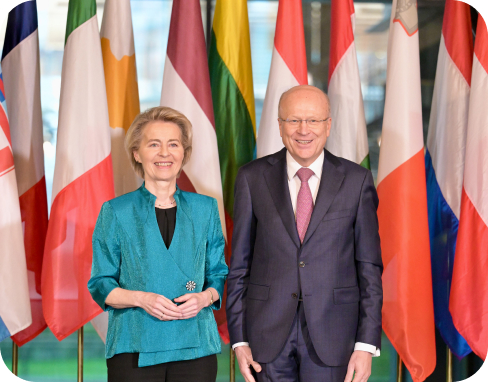
Solemn undertaking by the European Commission
At formal sittings held in January, February, March and May, the President of the European Commission, Ms Ursula von der Leyen, and the Members of the Commission give the solemn undertaking provided for in the Treaties, as part of the appointment of the new European Commission.
February
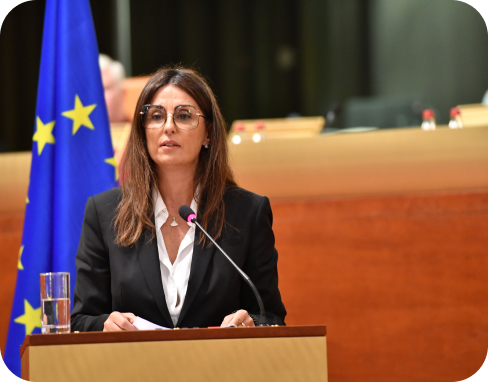
Solemn undertaking by the European Ombudsman
Ms Teresa Anjinho, elected by the European Parliament to the office of European Ombudsman, gives the solemn undertaking before the Court.
March
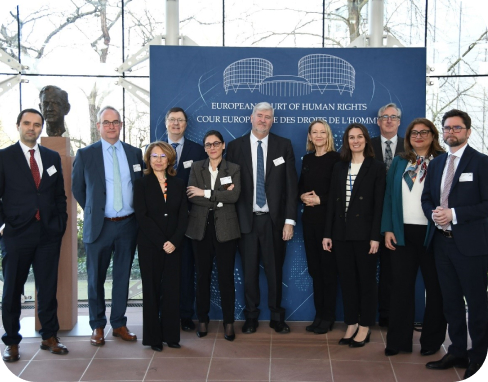
Visit by the Court’s departments to the ECtHR
A delegation from the Court of Justice of the European Union, consisting of the Registrar and heads of different departments of the Court, travels to Strasbourg for an official visit to the European Court of Human Rights. The delegation takes part in several round tables on common challenges and the opportunities for cooperation between the two courts.

March
Formal sitting to give eulogies
Formal tribute is paid to the memory of Mr Uno Lõhmus, first Estonian Judge at the Court of Justice (2004-2013), who died in August 2024, and Ms Ena Cremona, first Maltese Judge at the General Court (2004-2012), who died in May 2024.
March
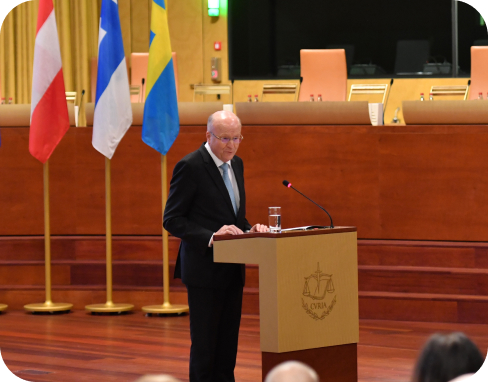
30 years since the accession of Austria, Finland and Sweden
A ceremony marking the 30th anniversary of the accession of Austria, Finland and Sweden to the European Union is held at the Court. Opened by the President of the Court, Mr Koen Lenaerts, the ceremony is punctuated by speeches made by prominent figures from those Member States, introduced by Members of the Court of Justice.
© European Law Moot Court
April
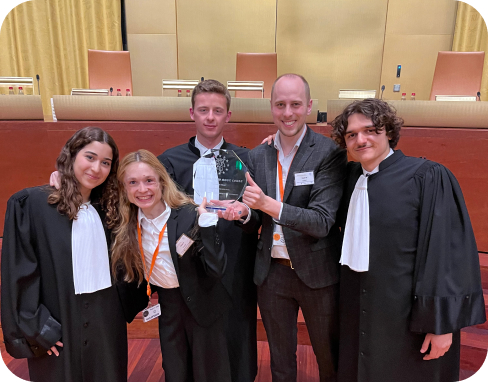
Final of the ‘European Law Moot Court’ competition
First organised in 1988, the 2025 edition of this university moot competition is won by the University of Fribourg (Switzerland).
April
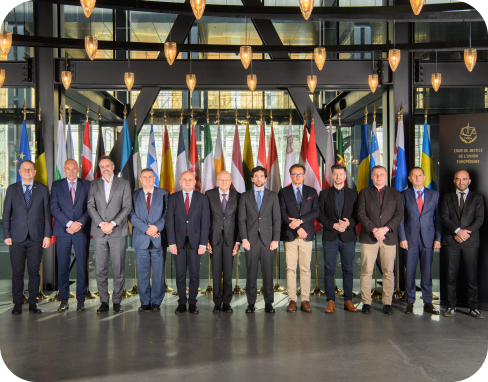
The European Parliament and the Court meet for their annual dialogue
The European Parliament and the Court meet in Luxembourg for the second edition of their annual dialogue on the functioning of the EU judicial system. This dialogue was established as part of the reform of the Statute of the Court that saw the partial transfer of jurisdiction to give preliminary rulings from the Court of Justice to the General Court in certain specific areas.
May
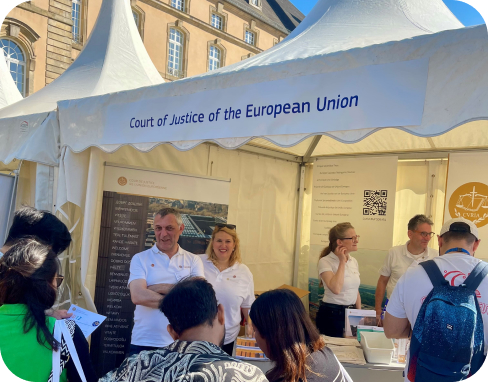
The Court celebrates Europe Day
The Court takes part in the European Village, organised to mark Europe Day by the Representation of the European Commission in Luxembourg, in cooperation with the European Parliament Liaison Office in Luxembourg. This year, the event is held in Echternach, a town in eastern Luxembourg.

May
Three new works of art on loan to the Court
In May, works by the Polish artist Magdalena Abakanowicz, Figury z cyklu Mędrcy (Figures in the ‘Sages’ series), are officially presented to the Court on loan from the National Museum in Wrocław, with the support of the Adam Mickiewicz Institute.
In October, the painting Silence by the Slovak artist Tamara Klimová is officially presented to the Court by the Bratislava City Gallery.
The marble sculpture The Bust of Lycurgus is presented to the Court – also in October – by the National Archaeological Museum of Naples (MANN). The work depicts the legendary legislator of Sparta.
May
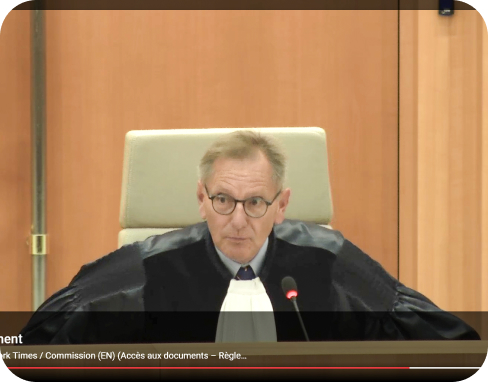
Live broadcast of the delivery of a General Court judgment
A judgment of the General Court is delivered live for the first time. The move is part of the development of the Institution’s resources and communication channels and reflects its intention to make European justice more accessible for EU citizens.
June
First audiovisual debriefing focussed on a judgment of the Court of Justice
The Institution launches a new communication format: a short audiovisual debriefing in which a Member of the Court presents a particular judgment. In so doing, the Court makes its key rulings more visible and accessible for the general public and the media.
June
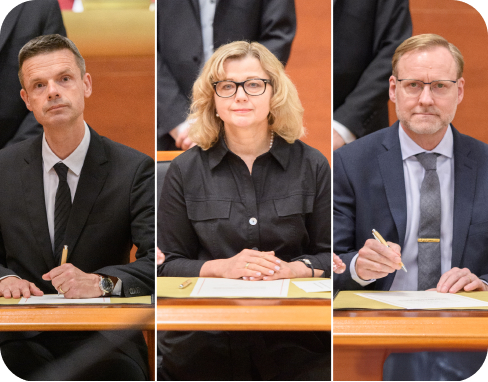
Taking of the oath by new Members
At a formal sitting, Mr Marko Bošnjak takes the oath on his entry into office as Judge at the Court of Justice. Ms Danutė Jočienė and Mr Jörgen Hettne take the oath as Judges at the General Court.
July
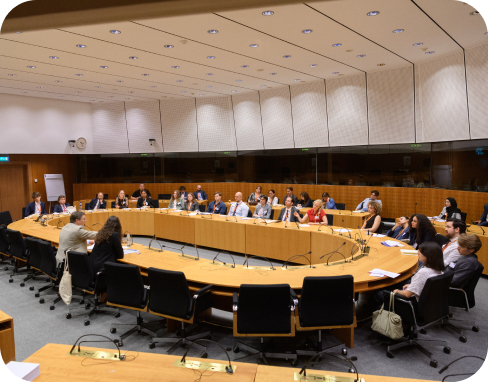
EU Legal Summer School
As part of the promotion of Luxembourg as a workplace for the staff of the European institutions, the Court coordinates the very first EU Legal Summer School, welcoming more than 30 students and young professionals of 24 European nationalities.
September
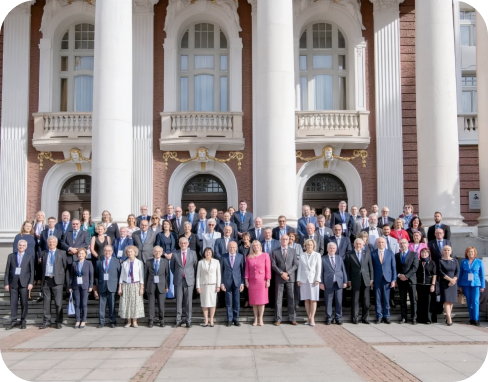
3rd edition of the ‘EUnited in Diversity’ conference
Bulgaria’s Constitutional Court hosts the 3rd edition of the ‘EUnited in Diversity’ conference, organised in cooperation with the Court. This year, the conference that brings together the constitutional courts of the Member States considers the role of constitutional justice in the common legal order of the European Union.
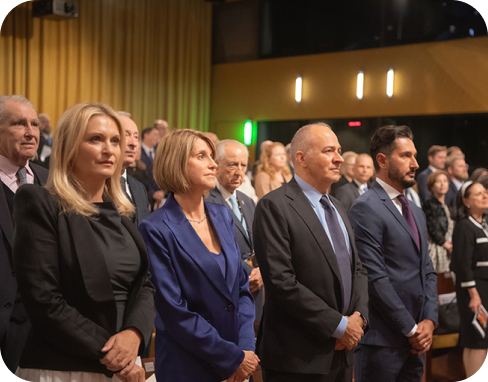
September
Entry into office of new Members at the Court of Justice and the General Court and partial replacement of the General Court
A formal sitting is held at the Court to mark the departure of certain Members and the taking of the oath by new Members. Mr Alexander Kornezov becomes a Judge at the Court of Justice. New judges take office at the General Court: Mr Francesco Bestagno, Ms Raffaella Pezzuto and Ms Tanja Pavelin.
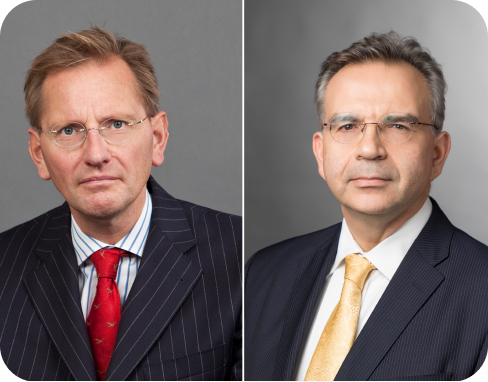
September
Re-election of the President and the Vice-President of the General Court
Following the partial replacement of the Members of the General Court of the European Union, Mr Marc van der Woude is re-elected President of the General Court for the 2025-2028 period. Mr Savvas Papasavvas is also re-elected Vice-President for the same period.
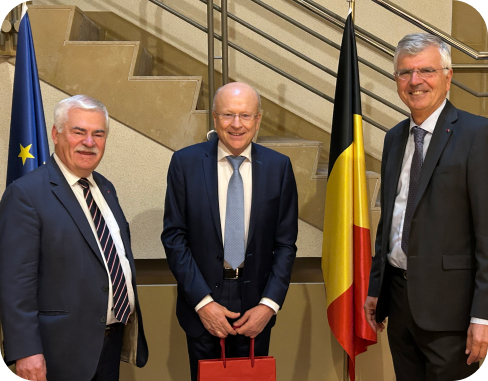
September
Visit by the Court to Belgium’s Constitutional Court
A delegation from the Court pays a visit to the Belgian Constitutional Court. Talks focus on the role of the Constitutional Court as a European court, the rights of foreign nationals, gender equality and the balance between security and privacy in a digital environment.
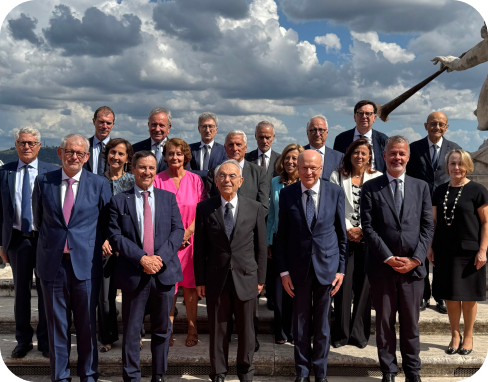
September
Visit by the Court to Italy’s Constitutional Court
A delegation from the Court pays a visit to the Italian Constitutional Court. Talks focus on the role of the Constitutional Court as a European court, the rule of law, security and privacy, and asylum and migration.
October
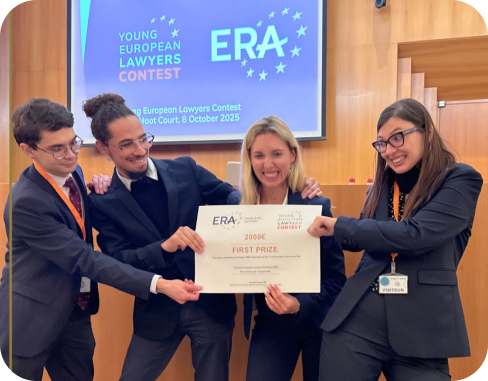
Final of the Young European Lawyers Contest
The Court hosts the final of the Young European Lawyers Contest, organised by the Academy of European Law (ERA). Teams from across Europe apply EU law on digital rights, data protection, artificial intelligence and cross-border justice. They plead their case before a jury composed of Judges of the General Court and legal professionals.

October
Open Day at the Court
As every year, the Court opens its doors to the general public, enabling people to discover how the Court functions and learn about its history and its buildings. The 2025 Open Day is attended by almost 2 600 visitors, who explore its corridors, learn about its procedures and meet the people who work there, thus gaining a better understanding of the central role played by the Court in the European Union’s mission.
November
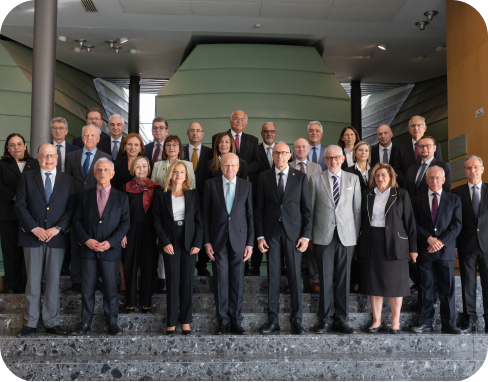
Visit by the Court to Cyprus
A delegation from the Court of Justice travels to Cyprus for talks with its Supreme Constitutional Court and Supreme Court on equality, data protection and the asylum procedure. The delegation also meets with President Nikos Christodoulides, Ms Annita Demetriou, the President of the House of Representatives, Mr Marios Hartsiotis, the Minister for Justice, and Mr George Savvides, the Attorney-General.
November
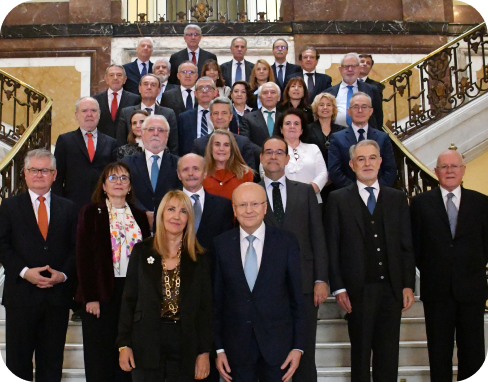
Visit by the Court to Spain’s Supreme Court
A delegation from the Court of Justice travels to the Spanish Supreme Court in Madrid, where it is welcomed by the Court’s President, Ms Isabel Perelló Doménech. The visit is an opportunity for talks on EU law, the protection of fundamental rights and the challenges associated with the rule of law and judicial independence.
November
Visit by the European Court of Human Rights to the Court
A delegation from the European Court of Human Rights pays an official visit to the Court. The visit takes the form of a series of round tables devoted to issues of joint interest, such as the best interests of the child, freedom of expression in the digital era and access to asylum procedures.
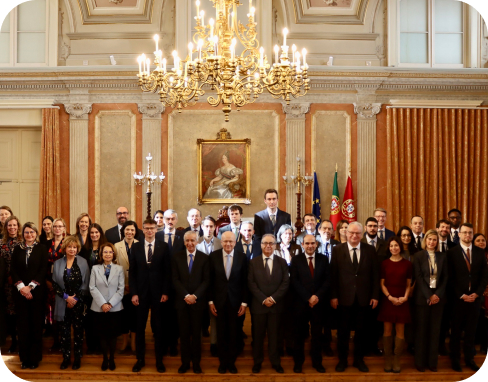
© Gabinete do Presidente, Supremo Tribunal de Justiça
November
Meeting of the Judicial Network of the European Union
The 7th annual meeting of the correspondents of the Judicial Network of the European Union is held in Lisbon, bringing together representatives of 47 member courts. It is devoted to European judicial dialogue, with a particular focus on the obligation on national courts and tribunals ruling at last instance to make a reference for a preliminary ruling.
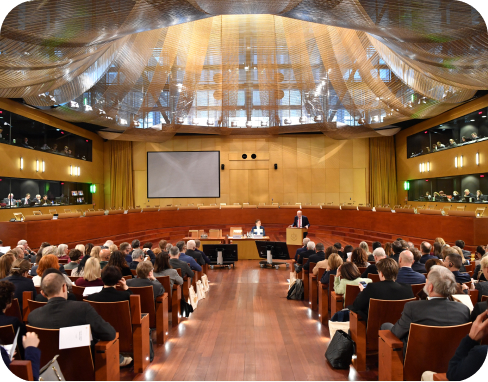
December
Meeting of Judges
The Court plays host to around 150 judges from the Member States of the European Union. This meeting offers national judges the opportunity to discuss matters of joint interest directly with Members of the Court, thus strengthening the close cooperation between the Court and national courts and tribunals.
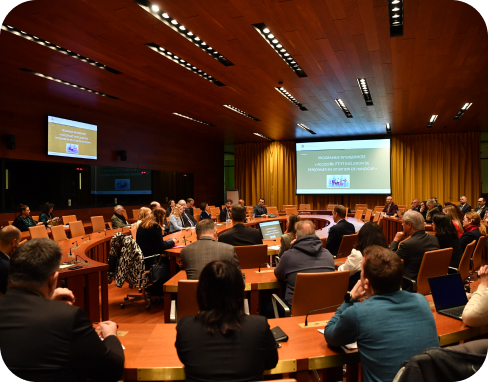
December
Disability Awareness Day
To mark the International Day of Persons with Disabilities, the Court organises two days of events to raise awareness. A whole range of activities offer staff opportunities – through art, culture and communication – to learn about the values embodied by persons with disabilities: creativity, resilience in the face of obstacles, authenticity and the ability to be a source of inspiration for everyone.
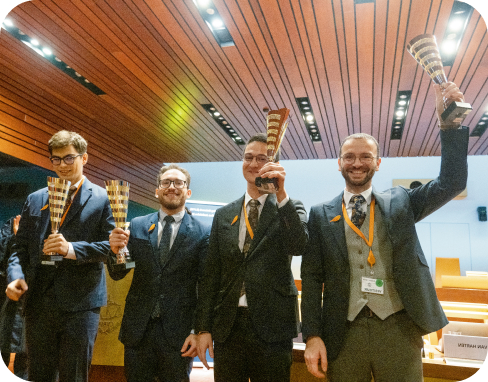
December
Final of the THEMIS 2025 competition
The Court hosts the Grand Final of THEMIS 2025, a competition open to future EU judges in the initial stage of their training. The competition is one of the flagship initiatives of the European Judicial Training Network (EJTN). Eight teams, from six Member States, present their work, with the team from Romania finishing in first place.

December
Visit by the Council of Bars and Law Societies of Europe (CCBE)
A delegation from the CBBE, representing the Bars and Law Societies of 46 countries and headed up by its President, Mr Thierry Wickers, pays an official visit to the Court. Round tables consider judicial procedures, the independence of lawyers and technological developments, including artificial intelligence and the broadcasting of hearings.
B | The year in figures
The Institution in 2025
The judicial year (Court of Justice and General Court)
The Linguistic Services
As a multilingual judicial institution, the Court must be able to deal with a case irrespective of the official language of the European Union in which it has been brought. It then ensures that its case-law is disseminated in all those languages.
Multilingualism at the Court of Justice of the European Union – Ensuring equal access to justice