


A | Introduction by the Registrar
2025 was a major milestone in the Institution’s development – it was an ambitious year focussed on strengthening the foundations upon which the Court is based whilst preparing it for changes going forward.

Alfredo Calot Escobar
Registrar of the Court of Justice
In an age of emerging technologies and of the partial restructuring of the labour market, and against the background of the high expectations weighing upon the European Union, it is important to remember the values underlying the functioning of the Court – quality and speed of justice, proximity to citizens, linguistic and cultural diversity and the optimum management of the resources entrusted to it. It is with the very aim of ensuring that those values are protected that the Court has undertaken a number of strategic projects with a view to addressing the expected changes.
On the judicial front, 2025 marked the first full year since the partial transfer of references for a preliminary ruling from the Court of Justice to the General Court took effect. The in-depth preparations made by all the Institution’s departments ensured a fluid and orderly implementation of the reform, demonstrating the departments’ versatility and their capacity to support the two courts in the face of their new challenges. The findings of the first review of the reform’s implementation are very positive, with all the objectives having been achieved: the transfer is contributing to improved case handling and to full advantage being taken of the reform to the structure of the Court of Justice of the European Union, for the benefit of all citizens. At the same time, the new rules on the publication of the observations submitted in preliminary ruling procedures have been successfully put into effect and provide a better understanding of the preliminary ruling mechanism and the legal questions submitted for debate.
Bringing the Court closer to citizens was also one of the year’s priorities. The Institution’s communication and IT departments, acting in close partnership, worked intensively to redesign the Court’s website, integrating a completely revamped search engine and consolidating the arrangements for the online broadcasting of hearings. At the same time, the diversity of the communication channels was boosted, in particular with the launch of Curia Web TV, a new modern and educational platform which uses eye-catching audiovisual content to improve viewers’ understanding of the Court’s judicial activities. In other words, the Institution has not only developed a more user-friendly and appealing website: following efforts made to step up its social media presence, it has succeeded in modernising its external communication policy targeting the general public and younger generations.
‘Appeal’ was also the guiding concept of the Court’s human resources policy, which saw the Institution implement many initiatives to improve its ability to attract candidates from all Member States and with all skillsets. The Institution has thus committed to developing more appealing, more inclusive and clearer paths to recruitment, with the goal of expanding the pool of candidates interested in working at the Court. Improvements to the internship arrangements have been a particular focus, to ensure that the process of taking on interns guarantees equal access to all young graduates who want to learn more about the Institution. Work has also been undertaken in other fields to expand awareness-raising campaigns in Member States whose nationals are less well represented within the Institution, with the permanent aim of increasing the cultural and linguistic diversity of its staff. Lastly, several initiatives have allowed the Court to broaden its accessibility and inclusion policy so as to offer people with a disability the opportunity to take up permanent posts at the Institution and to contribute to it becoming more ambitious in that field with each passing day.
Staying true to its spirit of innovation, the Court has taken significant steps in the technological sphere. It has pushed ahead with the integration and development of tools based on artificial intelligence and, at the same time, undertaken extensive work to develop an ethical framework fully tailored to the requirements of the Court’s judicial role. From the drafting of a Code of Ethics for the Integration of Artificial Intelligence to the development of specific guidelines governing the use of the AI tools within the Institution, the Court has sought to facilitate the use of those tools offering ever-increasing potential. Such tools do, however, require a sound understanding of their limits, the risks associated with them and the need to ensure constant human supervision. The Court has thus continued to forge ahead with both determination and caution, in particular by expanding the training programmes offered to staff to assist them with the use of this new technology.
Strong values, clear ambitions and a renewed and constant commitment to ensuring the quality of European justice: that is how I would sum up a proud 2025 for the Institution’s departments.

B | Key events of the year
2025: a pivotal year for judicial reform of the European Union
2025 marked the first full year of implementation of the partial transfer of jurisdiction to give preliminary rulings from the Court of Justice to the General Court and represents the completion of a long-standing process. The foundations for this reform had in fact been laid as early as the Treaty of Nice (2001), before being reasserted as part of the reform of the judicial architecture in 2015.
Its goal was to improve the efficiency of the EU judicial system by striking a better balance between the workload of the Court of Justice and that of the General Court. It was made possible by the doubling of the number of Judges of the General Court, which was completed in 2022, giving the General Court the capacities necessary to handle more cases.
Its implementation necessitated significant amendments to the Statute and to the Rules of Procedure. The amendments to the Statute, proposed by the Court of Justice, were adopted by the European Parliament and the Council of the European Union. The amendments to the Rules of Procedure following the revision of the Statute to ensure its implementation were, in turn, approved by the Council.
The final stage of that reform was completed on 1 October 2024, with the entry into application of the new rules implementing the partial transfer of jurisdiction to give preliminary rulings to the General Court and modernising the procedures before the two courts. After a full year of application, the first review of the reform shows that the Court of Justice and the General Court have fully integrated these new working arrangements, to the satisfaction of all involved in the preliminary ruling procedure.
What is a reference for a preliminary ruling?
EU law forms part of the national law of every Member State of the European Union. This means that EU law can be relied on before national courts and tribunals, which apply EU law directly.
Where doubt exists about how EU law should be interpreted in a case, the national courts may, and in certain cases must, refer questions to the Court of Justice, and in certain specific areas to the General Court. The national courts can thus obtain clarifications about the meaning of a provision of EU law, or even about its validity. This then allows them to apply EU law correctly and consistently.
Jurisdiction of the General Court in preliminary rulings
The General Court now has jurisdiction to examine requests for a preliminary ruling concerning specific, clearly demarcated areas, which are sufficiently separable from other areas and which have generated a substantial body of case-law of the Court of Justice. This reform thus allows the workload of the Court of Justice to be eased in practical terms, by transferring to the General Court questions referred for a preliminary ruling that fall within several specific areas, namely (i) the common system of VAT, (ii) excise duties, (iii) the Customs Code, (iv) the tariff classification of goods, (v) compensation and assistance of passengers in the event of denied boarding, delay or cancellation, and (vi) the system for greenhouse gas emission allowance trading.
The one-stop shop: an effective process
The reform has not changed the procedure for submitting requests for a preliminary ruling: all requests continue to be lodged before the Court of Justice. However, a ‘one-stop shop’ mechanism identifies those requests that come under the jurisdiction of the General Court. The decision to keep a case before the Court of Justice or to transfer it falls either to the President of the Court, after hearing the Vice President and the First Advocate General, or to the Court of Justice at its general meeting.
At the General Court, two specialist chambers, sitting, in principle, in a five-judge formation, now have jurisdiction to hear and determine such cases. Furthermore, certain Judges of the General Court are also designated to perform the duties of Advocate General at the General Court to ensure that there is a procedure equivalent to that before the Court of Justice.
Actions and reviews
In preliminary rulings, given the nature of the procedure, there cannot be an appeal before the Court of Justice against decisions given by the General Court. There is, however, a review mechanism: within one month, the First Advocate General of the Court of Justice may propose that the Court of Justice review a decision of the General Court where there is a serious risk of the unity or consistency of EU law being affected.
One-year review
Since the reform came into effect, the new one-stop shop has already dealt with around 100 preliminary ruling cases. Approximately 85% of them were transmitted to the General Court because they fell exclusively within the six areas in which that court has specific jurisdiction under the relevant rules.
In 2025 the General Court dealt with the first cases transferred under the new arrangements. Sixteen cases were thus closed without it having been necessary to hold a hearing or request an Opinion. The majority – 11 cases – were closed by order. Five cases were disposed of by a judgment. The time taken to deal with cases proved particularly short: 10.9 months on average for the cases settled by a judgment, from the one-stop shop to the final ruling (6.2 months on average if the cases settled by judgment or order are included).
The arrangements are therefore operating effectively and the initial results show that the reform is meeting its objectives: to speed up case handling and share the workload between the Courts of the European Union for the benefit of citizens and undertakings.
Would you like to learn more?
To give legal professionals and, in particular, national courts a better understanding of how the one-stop shop operates and the criteria for the division of competences, the Institution has published a document on the implementation of the new rules on the partial transfer of jurisdiction to give preliminary rulings to the General Court. Available on the Court’s website, the document lists the requests lodged in the first year following the entry into force of the rules and indicates, for each request, whether it was transmitted to the General Court or kept before the Court of Justice, stating the relevant reasons.
Watch the video: The division of competences between the Court of Justice and the General Court

Making European justice more transparent
2025 represents a major turning point in the Court’s communication policy. Driven by technological developments and by the intention to make European justice more accessible for and closer to citizens, the Institution has expanded a number of initiatives intended to modernise its information channels and to promote a better understanding of its role and activities by the public.
New social media presence to bring the Court closer to citizens
Today, social media are part of citizens’ daily life and represent a key source of information for many of them, in particular the younger generations. To meet that need and, in so doing, to ensure that reliable and accurate information is shared about its activities in the most accessible way for citizens, the Court has diversified its social media presence, opening accounts in 2025 on four new platforms: Bluesky, Threads, WhatsApp and Instagram.
Thanks to these channels, which supplement the information provided by the Court on LinkedIn, X, YouTube and Mastodon, the Court is able to reach new audiences and to communicate with them – in a manner tailored to their needs and accessible directly by them – about its activities and the importance of its role in the protection of citizens’ rights and the preservation of a Europe founded on democratic values.
In this way, the public can easily access clear information about the Court’s latest judicial activity at any time and from anywhere. From early 2026, this will be supplemented by innovative and expanded video content, with the launch of the new audiovisual platform Curia Web TV.
Attend Court hearings from anywhere in Europe
The hearings before the Court of Justice and the General Court, which are held in Luxembourg and represent a key moment in proceedings, are public and open to all citizens. With the aim of ensuring the transparency and accessibility of justice for 450 million European citizens, for whom the decisions of the Courts of the European Union are of direct concern, the Court has established a system that allows everyone to attend hearings remotely, without having to travel to Luxembourg.
Back in April 2022, the Institution decided, on a trial basis, to make available on its website a service providing delayed access to broadcasts of hearings before the Grand Chamber of the Court of Justice and the full Court, as well as live broadcasts of the delivery of judgments and reading of Opinions. The success of that trial stage led to the inclusion of a special provision in the Rules of Procedure of the Court of Justice to make those arrangements permanent, as well as to open up the possibility of broadcasting certain hearings of chambers of five judges where justified by the case at hand. In addition, so that the context of the case and the exchanges between the parties and the judges at the hearing can be best understood, each broadcast of a hearing is preceded by a short video in which a press officer explains the case. That explanation is also broadcast on the Court’s website and social media.
As for the General Court, the broadcasting of hearings, the delivery of judgments and the reading of Opinions was also incorporated into its Rules of Procedure. As the implementing rules and procedures for such broadcasting had to be decided by the General Court, in February 2025 the General Court adopted a decision on the broadcasting of the delivery of judgments and the reading of Opinions. In accordance with that decision, the first broadcast took place in May, with the live delivery of a judgment of the Grand Chamber. A further two broadcasts followed in September.
This expansion of the Institution’s audiovisual communications not only allows the Court to make full use of the technological potential that saw an upsurge at the time of the 2020 health crisis, but above all means that anyone who takes an interest in the Court’s judicial activities, whether current or future legal professionals (national judges, lawyers, agents for the governments of the Member States and EU institutions, professors, students), journalists or, more generally, any citizen curious to learn more about the Institution’s role, can attend hearings on equal terms with those persons physically present in the courtrooms, wherever they may be, without having to travel to Luxembourg.
More transparent judicial debate
In the same spirit of openness, in 2025 the Court continued to implement the decision adopted in 2024 to publish online, once a case has been closed, the written observations lodged in preliminary ruling cases by the various stakeholders in the preliminary ruling procedure (parties before the national court, institutions, Member States, and so forth), unless those stakeholders raise an objection. To make it easier to consult the observations, they can be accessed using the Court’s search engine on its website, which allows any interested party to find out the positions adopted during the debate before the Court of Justice or the General Court prior to delivery of the preliminary ruling.
Modernising communications products to target the general public
In line with that objective of making case-law more accessible for non-specialists, the Court has continued with the modernisation of one of its flagship products: its press releases. They were re-designed in late 2023 so as to offer shorter summaries with a more narrative structure which are better suited to the expectations of the media and of the general public. That reform was launched in 2025 with the publication of clearer, more concise and more appealing press releases, written in more accessible language. The majority of them are accompanied by an “abstract”, a summary intended to facilitate its re-use by the media.
At the same time, the Court launched a new communication tool: short explanatory videos in the form of debriefings presented by judges who sat in the case are now broadcast after the delivery of the most important judgments. This innovative format means that decisions attracting significant media interest can be explained in a few minutes, once again in clear and accessible language. The very first short video debriefing, broadcast in June, concerned the Italian case of Kinsa (C‑460/23): the explanation was given in the language of the case (Italian) by the President of the Court, Mr Koen Lenaerts. Available with subtitles in the 24 official languages of the European Union, the video went online immediately after the delivery of the judgment on the Curia website and was published simultaneously on social media. It proved to be very successful, attracting almost 20 000 views on LinkedIn. In 2025, 11 explanatory videos of this kind concerning judgments of the Grand Chamber of the Court of Justice were published on the Court’s website and on social media.
Through these initiatives, in 2025 the Court has pushed ahead with its commitments to make European justice more transparent and easier to understand and to bring it closer to citizens by tailoring its communication formats to the public’s new expectations.
Cooperation with European courts and tribunals
EU law applies in all Member States, thus forming a shared body of law founded on the community of values upon which the European Union is based. With a view to strengthening that legal community and ensuring a uniform interpretation of EU law, and in addition to the proceedings before its two courts, the Court of Justice of the European Union has long been committed to open and constant dialogue with the judges of the Member States – not only judges of the constitutional and supreme courts of the Member States or courts of first instance and appeal, but also representatives of judicial networks and international courts, such as the European Court of Human Rights, with which it discusses best practices to enhance the quality of justice. That dialogue, which takes the form of conferences and meetings held both at the Court and in the Member States, was particularly rich in 2025.
‘EUnited in Diversity’ in Sofia
First organised in 2021 in Riga (Latvia) and expanded when held for the second time in 2023 in The Hague (Netherlands), the third edition of the ‘EUnited in Diversity’ conference took place in September 2025, with the support of the Bulgarian Constitutional Court in Sofia. These biennial conferences bring together representatives of the Court of Justice and the national constitutional courts with the goal not only of strengthening dialogue between those courts, but also of promoting interaction between the common legal order of the European Union and the national legal systems of the Member States.
Having adopted as its theme ‘The role of constitutional justice in the common legal order of the European Union’, the 2025 conference explored the concept of ‘constitutional justice’ within the European Union, with the participation of the constitutional courts (or courts exercising constitutional jurisdiction) of 21 Member States. The programme consisted of four panels focussing on the division of competences between the European Union and the Member States under the principle of delegation, the protection of the European Union’s identity in times of crisis, the relationship between national constitutional law and EU law in the Member States, and the interpretation and application of EU law in order to ensure the coherence and consistency of the common legal order.
The conference was also the opportunity for a meeting between the senior administrative officials of the participating institutions, the goals of which were to facilitate the exchange of best practices and to discuss matters of mutual interest. The main topic of the roundtable meeting, at which the Court was represented by its Director-General for Information, was thus ‘the impact of digital technologies on the work of the courts’.
Meeting of Judges at the Court
In early December 2025, the traditional Meeting of Judges held at the Court of Justice was attended by 148 judges from courts of appeal and courts of first instance of all the Member States. The topics discussed at the various working sessions included recent developments in the preliminary ruling procedure, recent case-law on asylum and immigration, the new jurisdiction of the General Court to give preliminary rulings, and recent case-law on the European Arrest Warrant and judicial cooperation in civil matters.
This meeting, which was first organised by the Court in 1968, brings the Members of the Court of Justice and of the General Court into direct contact with judges of the Member States. It allows informal connections to be made, encourages the uniform application of EU law by national courts (ordinary courts applying EU law), offers a forum for discussion on matters of joint concern, and promotes knowledge sharing and the mutual understanding of the different legal systems, as well as cooperation between courts.
Meeting of the Judicial Network of the European Union in Lisbon
The seventh annual meeting of the correspondents of the Judicial Network of the European Union (JNEU) was held in November in Lisbon (Portugal). Set up at the initiative of the Court in 2017, at a Meeting of Judges to mark the 60th anniversary of the Treaties of Rome, the JNEU’s goal is to enhance judicial cooperation in Europe to deliver high-quality justice. With 78 constitutional and supreme courts of the Member States and supreme courts of four non-Member States (Iceland, Liechtenstein, the United Kingdom and Ukraine) as its members, the JNEU is a permanent forum for debate between its members. It establishes a system of informal cooperation and dialogue between Europe’s highest courts and thus supplements the mechanism for formal cooperation, which takes the form of the preliminary ruling procedure.
Since the meetings of the JNEU are now organised by the national courts with the support of the Court, the 2025 meeting was coordinated by the Portuguese Constitutional Court, Supreme Court and Supreme Administrative Court. It was attended by 60 correspondents, from 20 Member States, one non-Member State, and four other European networks. The speeches made and the discussions held between the participants concerned the future of cooperation within the network and the scope of the obligation to make a reference for a preliminary ruling borne by national courts and tribunals ruling at last instance.
Meetings with the European Court of Human Rights
The European Court of Human Rights and the Court of Justice of the European Union are two of the key figures in the protection of fundamental rights in Europe. The two courts operate within two separate organisations (the Council of Europe and the European Union, respectively) but work side by side in pursuit of the same objectives, on the basis of shared values: human dignity, freedom, democracy, the protection of human rights, respect for the rule of law, the protection of minorities, tolerance, non-discrimination, solidarity and maintaining an area of peace and justice in Europe. They therefore ensure that they maintain a close relationship based on regular meetings, with a view to sharing developments in their respective case-law and discussing both matters of mutual interest and the common challenges facing them. The members of the two courts therefore meet every year, either in Luxembourg or Strasbourg, to foster that complementary relationship and their mutual cooperation with the aim of protecting fundamental rights in Europe.
This year, the meeting was held in November at the Court in Luxembourg. The members of the two judicial institutions took part in several roundtables covering freedom of expression in the digital era, the best interests of the child in cross-border child abduction cases, and the legal and physical obstacles to accessing asylum procedures. The official meeting also provided an opportunity for the Presidents of the two courts to discuss the challenges facing the justice system, which was recorded in a video interview.
Among other issues, the Presidents stressed the importance, in the current geopolitical and societal context, of citizens recognising what has formed the basis of the progress made over the past 75 years: the aspiration to guarantee people the best possible life, by restoring peace, re-establishing justice and ensuring the democratic functioning of society.

‘Every time there is a specific attack on judicial independence, every time the freedom of expression is turned against the values which it is meant to promote – pluralism, tolerance – with the rise of hate speech or violence, we must remember what is essential, we must remember what, at its core, we need to protect.’
M. Mattias Guyomar
President of the ECtHR
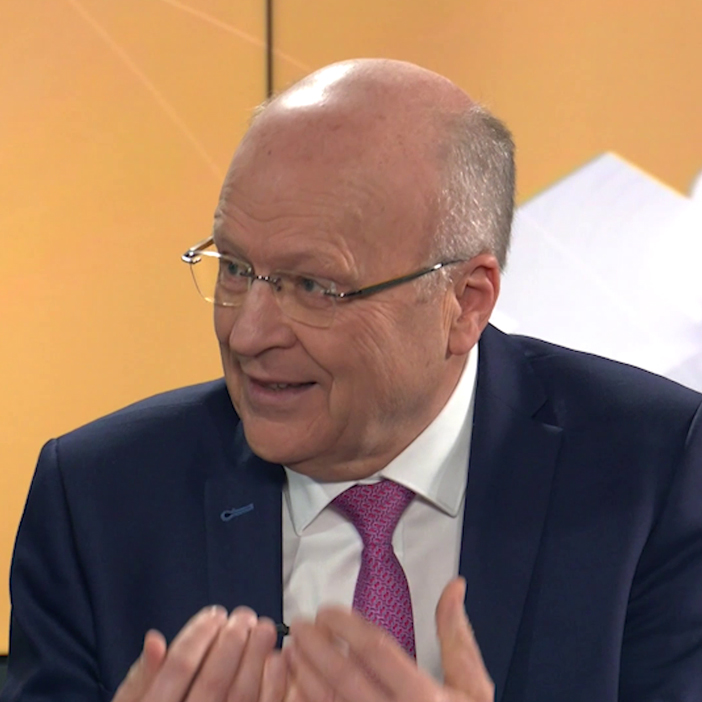
‘The rule of law protects citizens but it also protects the democratic system, a system which must be able to evolve from election to election and between elections, which must involve civil society, which must involve politically engaged citizens and groups of citizens. All of that is expressed in a wide range of judgments of our Court, which are often linked to the fundamental freedoms.’
M. Koen Lenaerts
President of the CJEU

C | Public relations
Visiting the Court
The Court works to bring the Institution closer to citizens by organising visits and seminars which contribute to improving understanding of EU law, using tailored programmes. Visits help to improve people’s understanding of the role of the EU courts and the concrete impact of their case-law on the daily life of citizens, whereas the seminars – which are primarily intended for national judges – foster dialogue between national and European courts. The Court welcomes people from all walks of life into its buildings but also offers virtual visits, in particular an online educational programme that allows secondary school students to learn about justice in the European Union from their classroom. In 2025, 412 such students took part in this programme.
Understanding justice within the European Union
The Communication Directorate’s press officers, who are lawyers by training, have the task of making judgments, orders and legal Opinions, as well as ongoing cases, easier to understand for journalists and other interested parties. They draft press releases in real time to inform journalists and legal practitioners about the decisions of the Court of Justice and the General Court. They send out regular newsletters covering important events in the judicial calendar (hearings and the delivery of judgments and the reading of Opinions) and institutional matters to those who have requested them from the Court’s Press service, as well as ‘info-rapid’ bulletins on cases for which there are no press releases. They also deal with emails and calls from citizens to the Court on various aspects of its activities (procedural information, explanation of a judgment, role of the Court, help with the website, and so forth).
Stay informed via the Court’s social media
So that information can be published live and relayed instantly, the Court maintains an active presence on social media via its LinkedIn and Mastodon accounts, its two X accounts (one in French and the other in English), and its Bluesky and Threads accounts. It also has a WhatsApp channel and a YouTube channel, which provides access in the 24 official languages to a variety of audiovisual content, including videos aimed at the general public to explain how the case-law of the Court affects the daily lives of citizens, and programmes of Curia Web TV. The Court published two new videos on YouTube in 2025:
Judicial transparency
What happens when a country doesn’t respect EU law?
Opened in 2025, the Court’s Instagram account targets a wider and younger audience, promoting its activities using engaging visual content.
The number of subscribers to all the Court’s platforms continues to grow, demonstrating the public’s interest in its activities.
Follow hearings and decisions in real time
In order to facilitate access to its judicial activity, the Court offers a system for broadcasting hearings.
The delivery of judgments of the Court of Justice and the reading of Opinions of the Advocates General are broadcast live, as are certain judgments and Opinions of the General Court. As for hearings of the Court of Justice, in accordance with the requirements of the Rules of Procedure, they are broadcast with a delay. The hearings in question as those of the full Court, the Grand Chamber or, exceptionally, of a five-judge Chamber. The video recording of a hearing remains available on the Curia website for one month.
For the major judgments, a judge who sat in the case presents the decision of the Court of Justice in a short explanatory video lasting a few minutes and using clear and accessible language (for more, see Chapter entitled ‘Making European justice more transparent’).
Before hearings are broadcast, an explanatory briefing on the case is published on the Court’s website in the languages of the hearing and relayed on social media.